Image
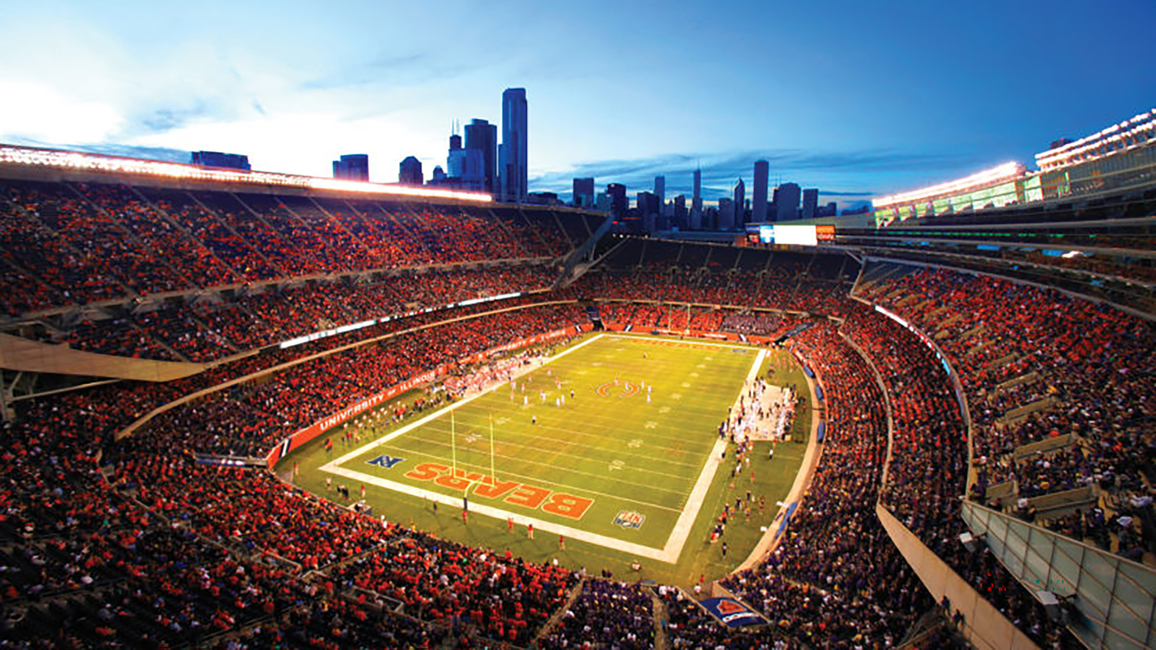



A new analysis from the University of Illinois Springfield Center for State Policy and Leadership, originally published by NPR Illinois, explores Illinois residents’ opinions on the potential relocation of the Chicago Bears and the use of public funding for a new stadium.
The analysis is based on a survey of 1,000 Illinois residents conducted in March 2026 after details of a proposed stadium offer from Indiana became public. Respondents were drawn from across the state and selected to be representative of Illinois’ population based on characteristics such as gender, race, political affiliation and urban and rural residency.
Findings show Illinois residents are closely divided on the importance of keeping the Bears in the state. About 49% of respondents said it is important that the team remains in Illinois, including 28.9% who said it is “very important,” while 50.3% said it is only somewhat important or not important at all, including 30.3% who said it is “not important at all.” The results suggest the issue is meaningful to many residents but not universally prioritized.
The importance of the issue varies significantly by region. Chicago residents expressed the strongest preference for keeping the team in Illinois, while residents in central and southern Illinois were largely indifferent or opposed. Central Illinois respondents showed near-neutral attitudes, while southern Illinois residents were the least concerned overall.
When asked how Illinois leaders should respond, the most supported approach, selected by 36.9% of respondents, was to allow the Bears to leave Soldier Field without offering public funding for a new stadium. Other options, including matching Indiana’s offer or requiring the team to fulfill its current lease, received moderate support. Only 13.1% of respondents supported offering a more generous public funding package than Indiana.
The survey also examined broader attitudes toward stadium financing. Nearly 70% of respondents said new stadiums should be funded mostly or entirely with private dollars, including 37.5% who support fully private funding and 32.1% who prefer more private than public funding. About 16% supported an even split between public and private funding, while fewer than 15% favored a model relying more heavily on taxpayer dollars. Views on funding were consistent across political parties, with Democrats, Republicans and independents showing similar preferences.
“These findings show that while Illinois residents have mixed views on whether the Bears should remain in the state, there is broad agreement that taxpayer funding for new stadiums should be limited,” said Nicholas Waterbury, assistant research director for the UIS Center for State Policy and Leadership.
The full analysis can be found on the NPR Illinois website.