Physics-Informed Neural Networks (PINNs) Integrating Physics and Machine Learning: A Synergistic Approach to Artificial Intelligence Education
Image
Author
Kong, Liang
Publish Date
Physics-Informed Neural Networks (PINNs) Integrating Physics and Machine Learning: A Synergistic Approach to Artificial Intelligence Education
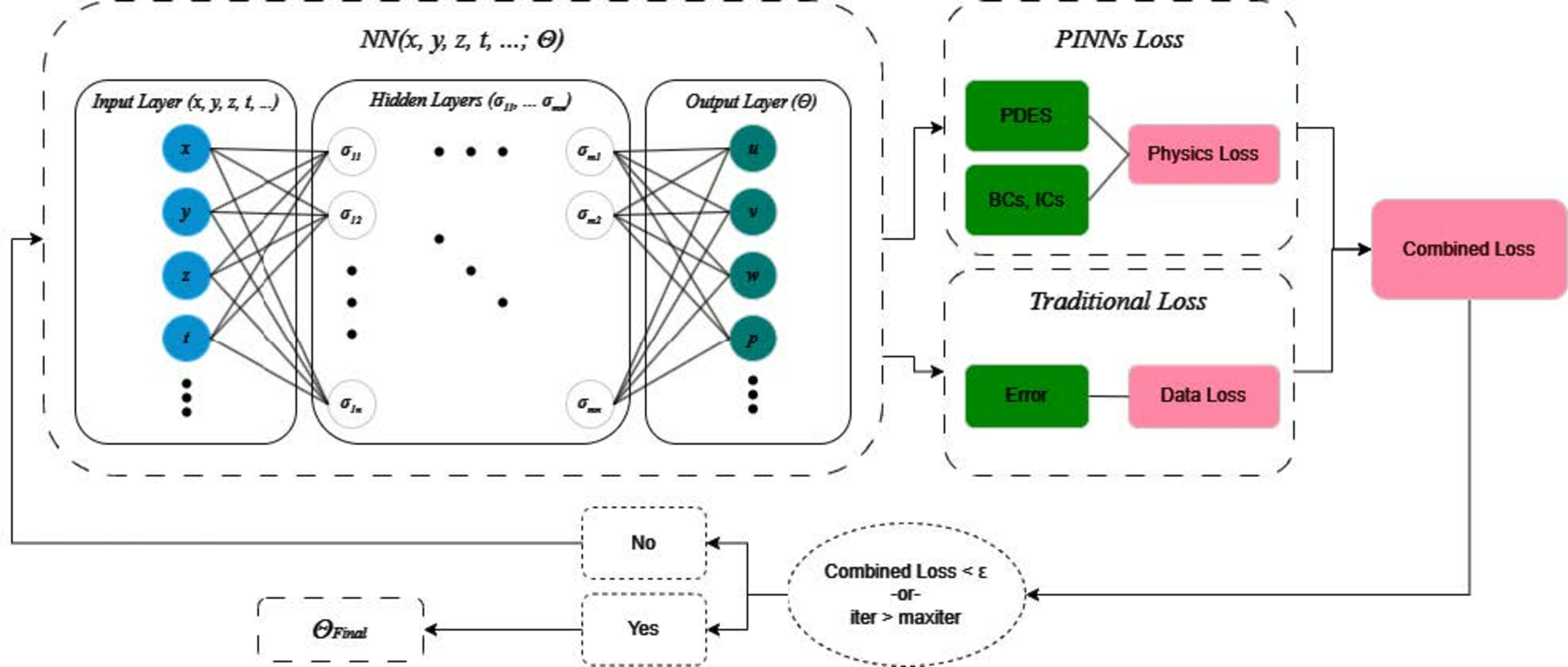
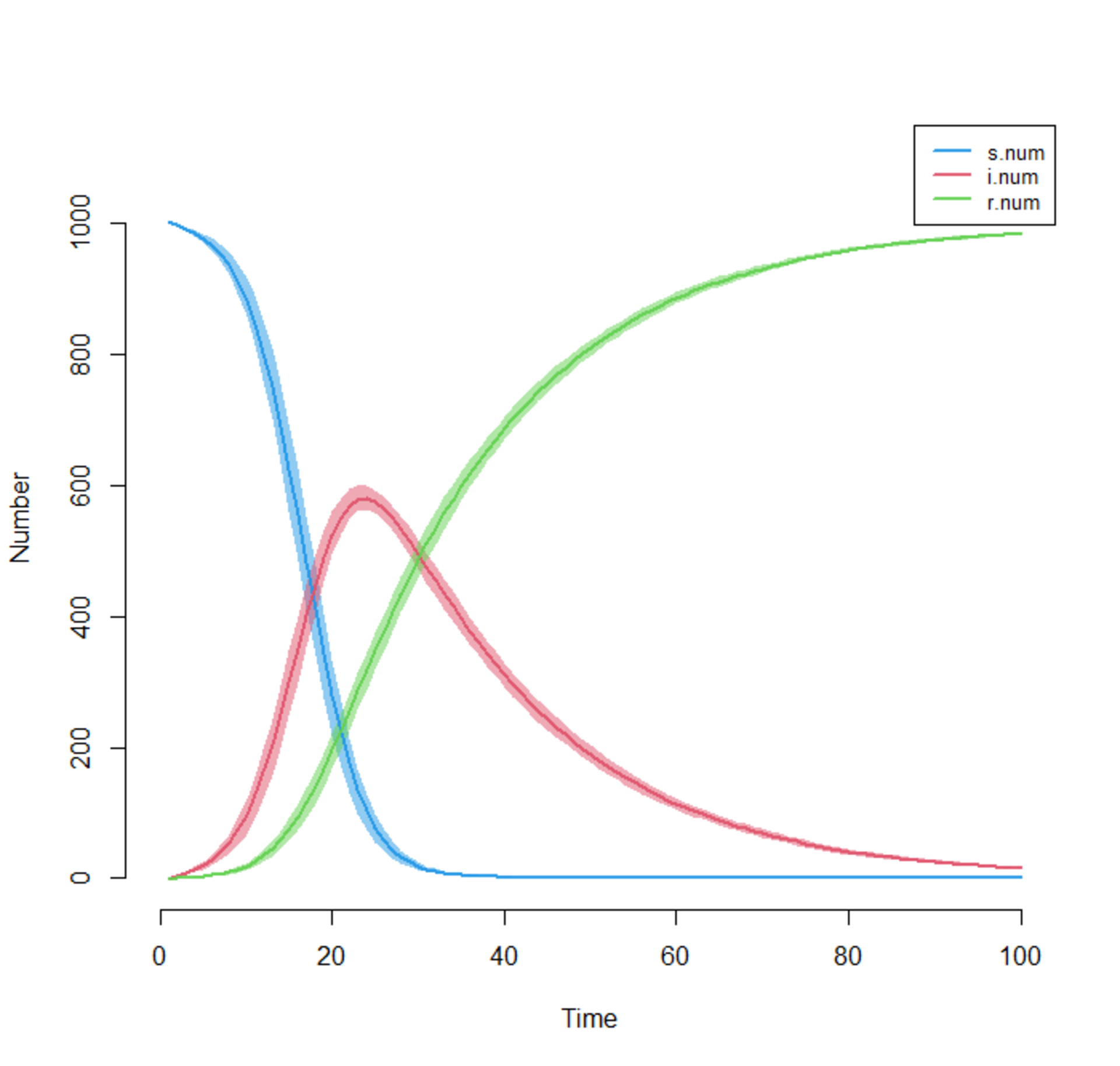
PINN Architecture Diagram. The PINN architecture enhances traditional models by incorporating a second (physics) penalty term into the loss function, improving accuracy and physical consistencyPINN simulation plot generated using the EpiModel with the ICM model
This research develops novel PINN architectures to simulate complex processes, including species spread, damped oscillations, and disease dynamics, by integrating differential equations with neural networks. The project emphasizes model interpretability and physical consistency, yielding promising results for equations such as the SEIR model and the Fisher and Lotka-Volterra systems.
Collaborators & Students
Christopher Denq (Math major)
Abhi Soni (CS major)
Anthony Delligatti (CS graduate)
Publications & Presentations
Exploring SEIR Epidemiological Modeling using Physics-Informed Neural Networks (with Abhishek Soni)—Published and presented in the 2025 IEEE International Conference on Software Engineering and Artificial Intelligence (SEAI).
Integrating Physics and Machine Learning: A Synergistic Approach to Artificial Intelligence Education (with Anthony Delligatti)—Published and presented in the 2024 Workshop on Artificial Intelligence and Education (WAIE).
A Meshfree Deep Learning Approach for Numerical Solution of Differential Equations with Implementation in Python (with Christopher Denq)—under review.



 UIS AI Chat