Image
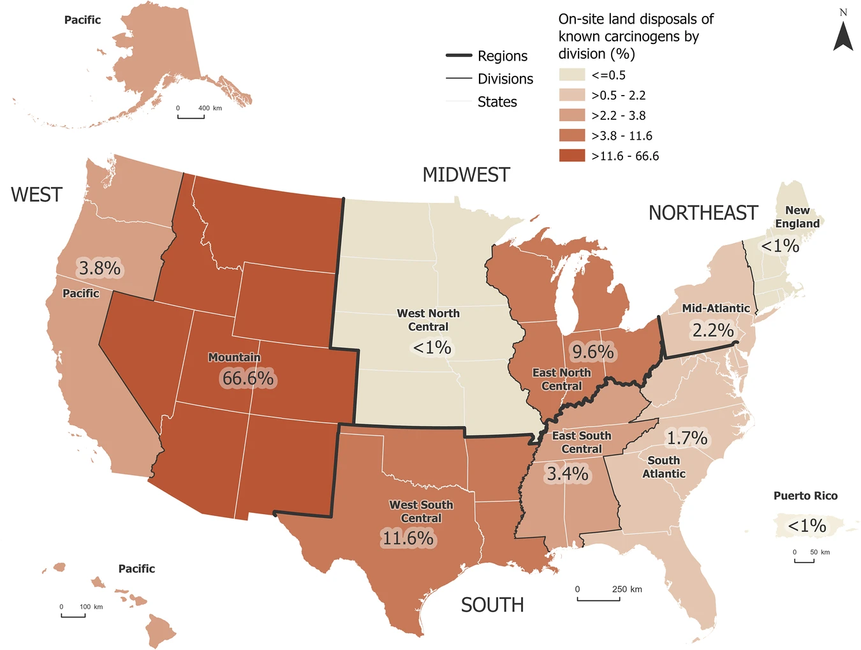



Background: Industrial facilities dispose of millions of pounds of chemical waste in U.S.-based landfills, surface impoundments, and underground injection wells annually, but information on populations living in proximity to these releases is limited.
Objective: We quantified on-site land disposals of known and suspected human carcinogens and evaluated population characteristics associated with disposals in the 50 U.S. states and Puerto Rico.
Methods: We linked land releases of known and suspected carcinogenic chemicals from regulatory data (2010-2018) to 2010 census tract data overall and by region. We estimated odds ratios and 95% confidence intervals for associations of population characteristics with land releases of arsenic, asbestos, benzene, beryllium, cadmium, formaldehyde, nickel, polychlorinated biphenyls (PCBs), cobalt, lead, and styrene, comparing tracts with the highest releases ( > median or 4th quartile) to those with zero releases using population density-adjusted multinomial logistic regression models.
Results: Known carcinogens with releases mostly to land included arsenic, asbestos, beryllium, cadmium, formaldehyde, nickel, and PCBs. Probable carcinogens included acrylamide, acrolein, cobalt, and hydrazine. Land disposal amounts were highest in the West and South. The tract proportion of Black population was associated with 8-31% higher odds of the highest land disposals of lead, cadmium, and formaldehyde. Increases in Hispanic and Latino population were associated with 29-33% higher odds of a tract having the highest disposals of benzene, asbestos, PCBs, and styrene. Measures of lower socioeconomic status were associated with the highest disposals, including 16-72% higher odds of tracts having the highest disposals per 10% increase in the proportion of families experiencing poverty.
Significance: Our findings highlight differences between populations living in areas with industrial land disposals compared to areas without them. As most studies of industrial pollution focus on air exposure, this study illustrates the need to consider land disposals as potential sources of environmental exposure to known and suspected carcinogens.
Impact: This evaluation showed that millions of pounds of carcinogenic chemicals and metals from industrial sources are disposed of on land annually across the U.S. Over 70% of industrial releases of asbestos, formaldehyde, polychlorinated biphenyls, and metals like beryllium, cadmium, and nickel occur as on-site land disposals to landfills, surface impoundments, and underground wells, with most occurring in the Southern and Western U.S. The highest volume disposals of these chemicals and metals occurred in census tracts with higher proportions of population with lower levels of educational attainment and family income and higher levels of poverty and unemployment.
Keywords: Asbestos; Landfills; Lead, cadmium; Polychlorinated biphenyls.
© 2026. This is a U.S. Government work and not under copyright protection in the US; foreign copyright protection may apply.