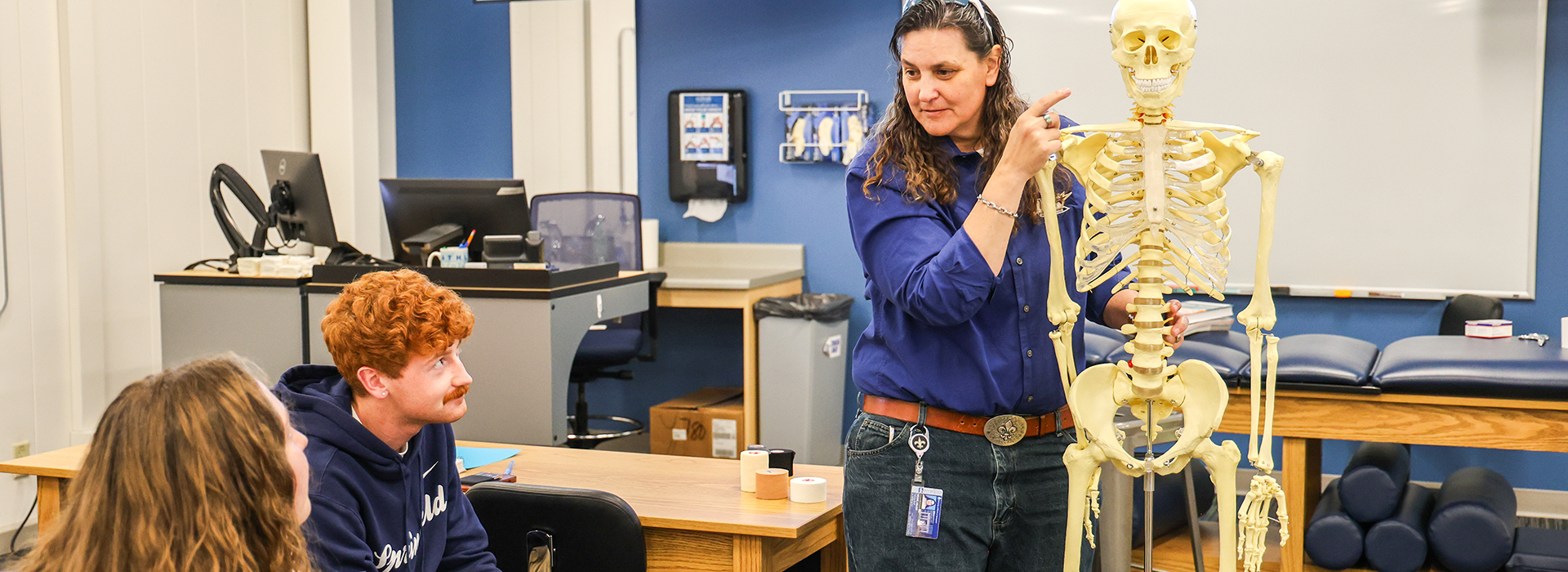
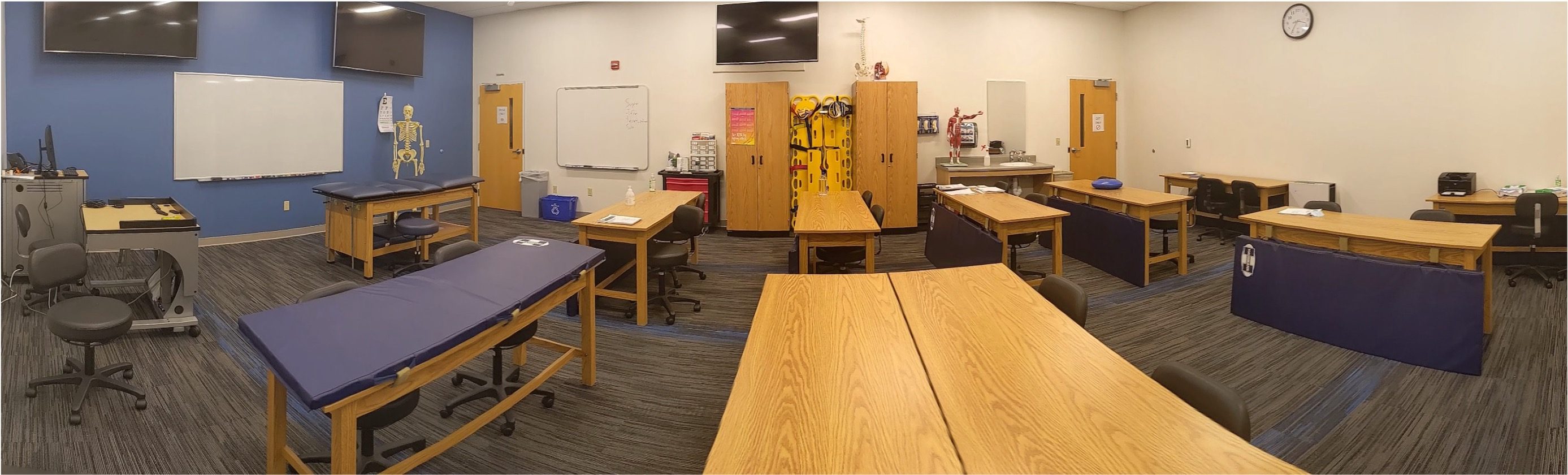
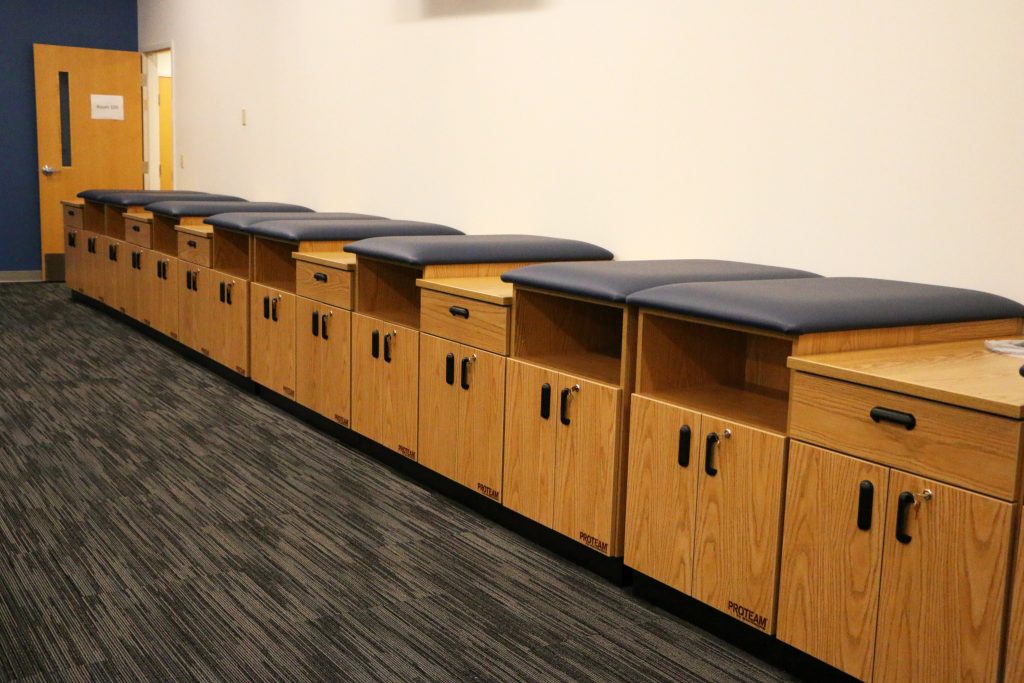
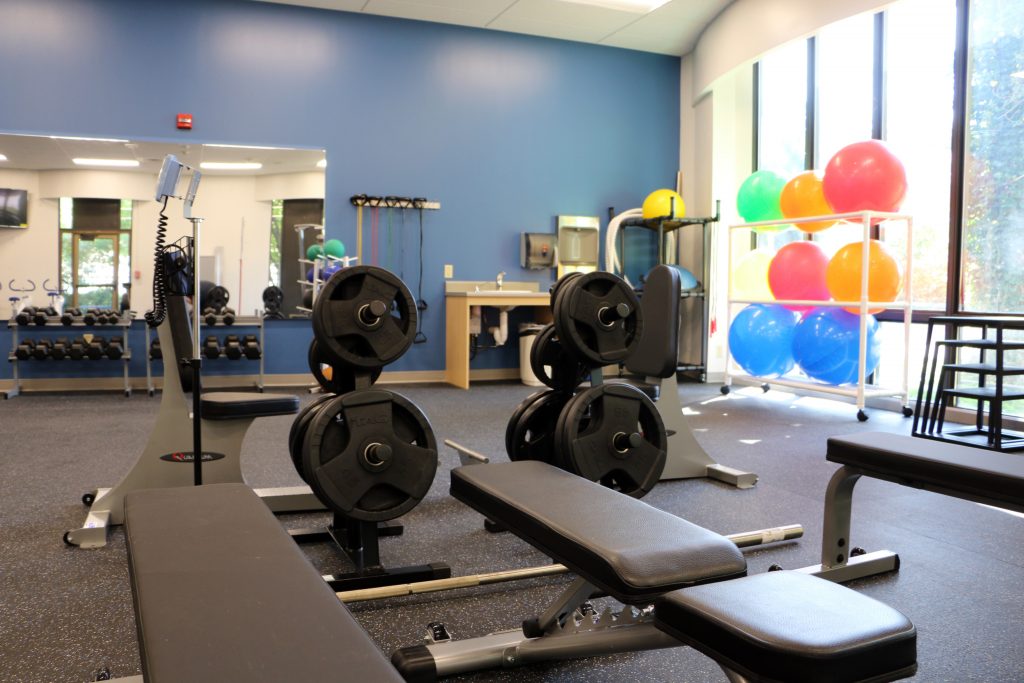
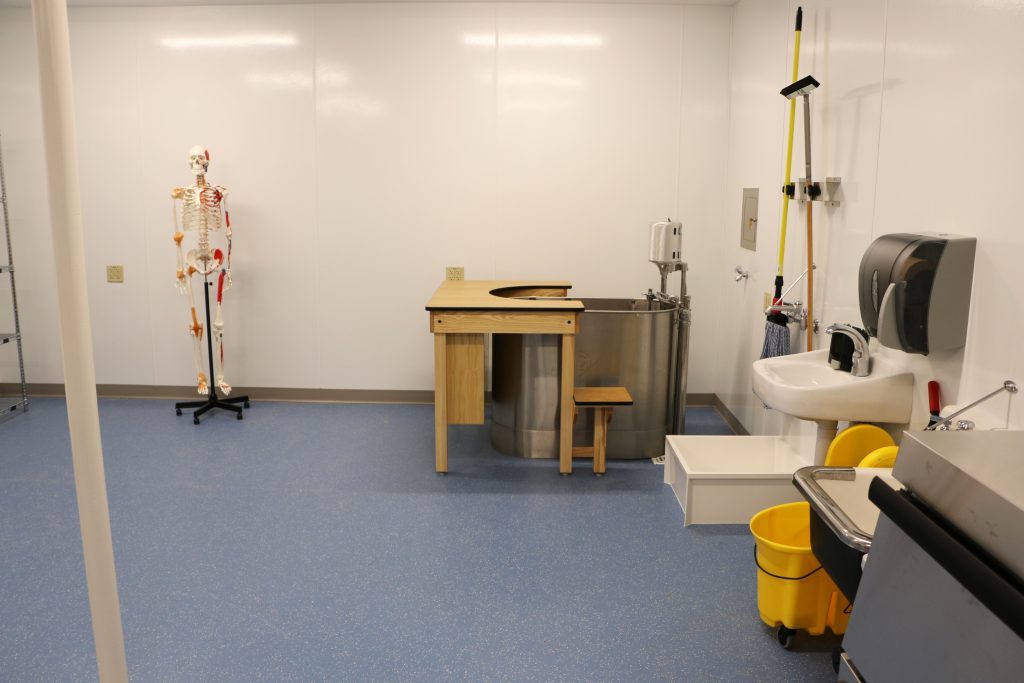
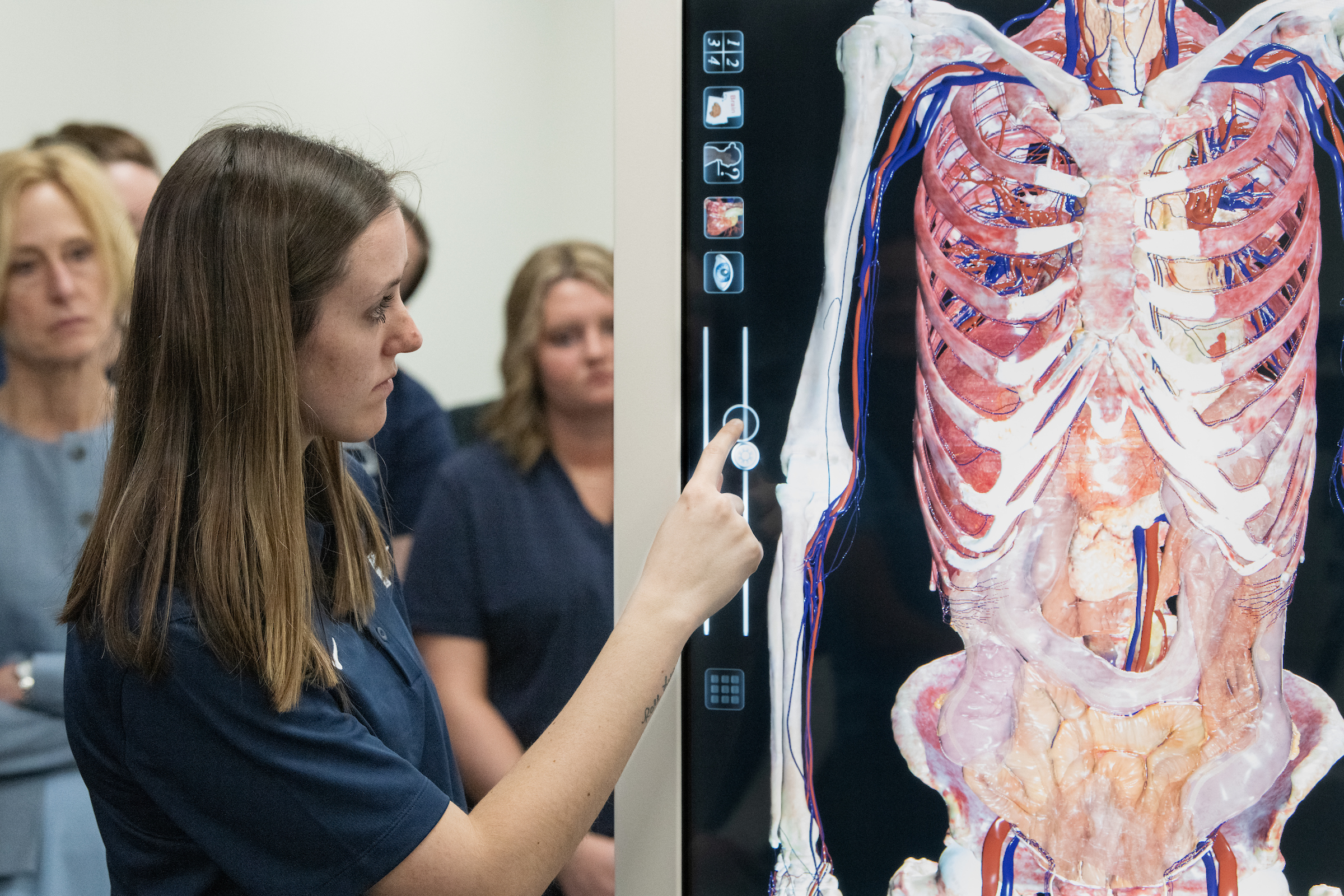
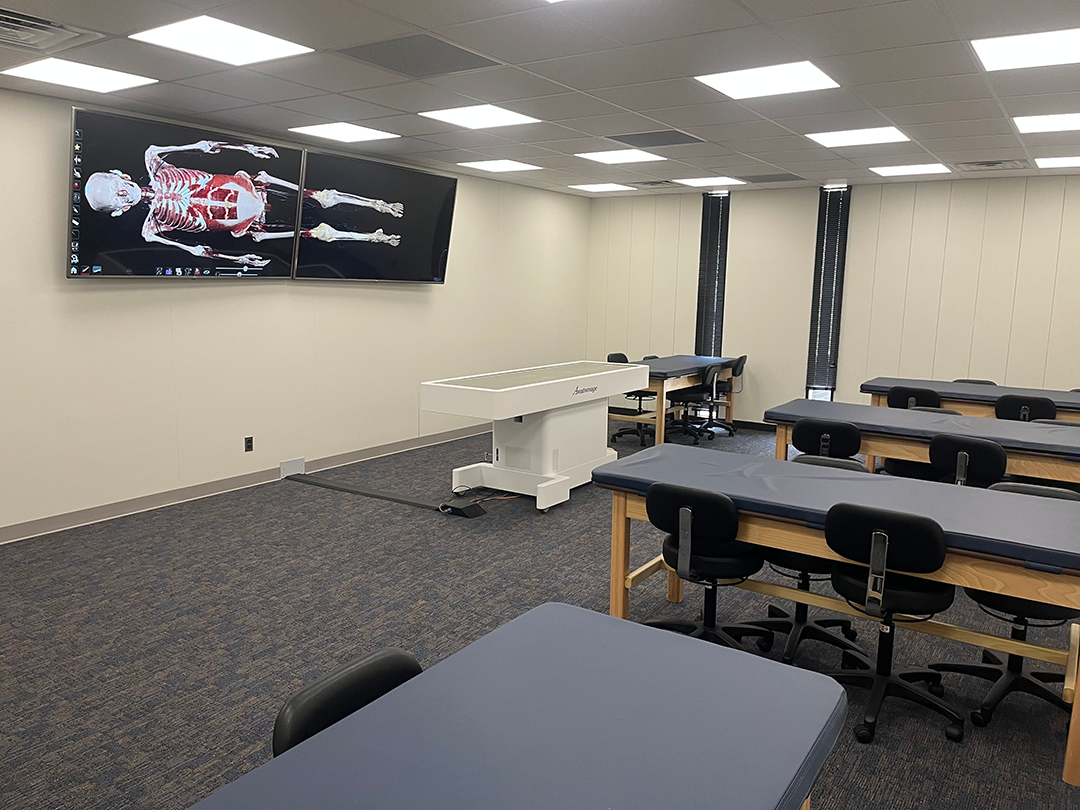
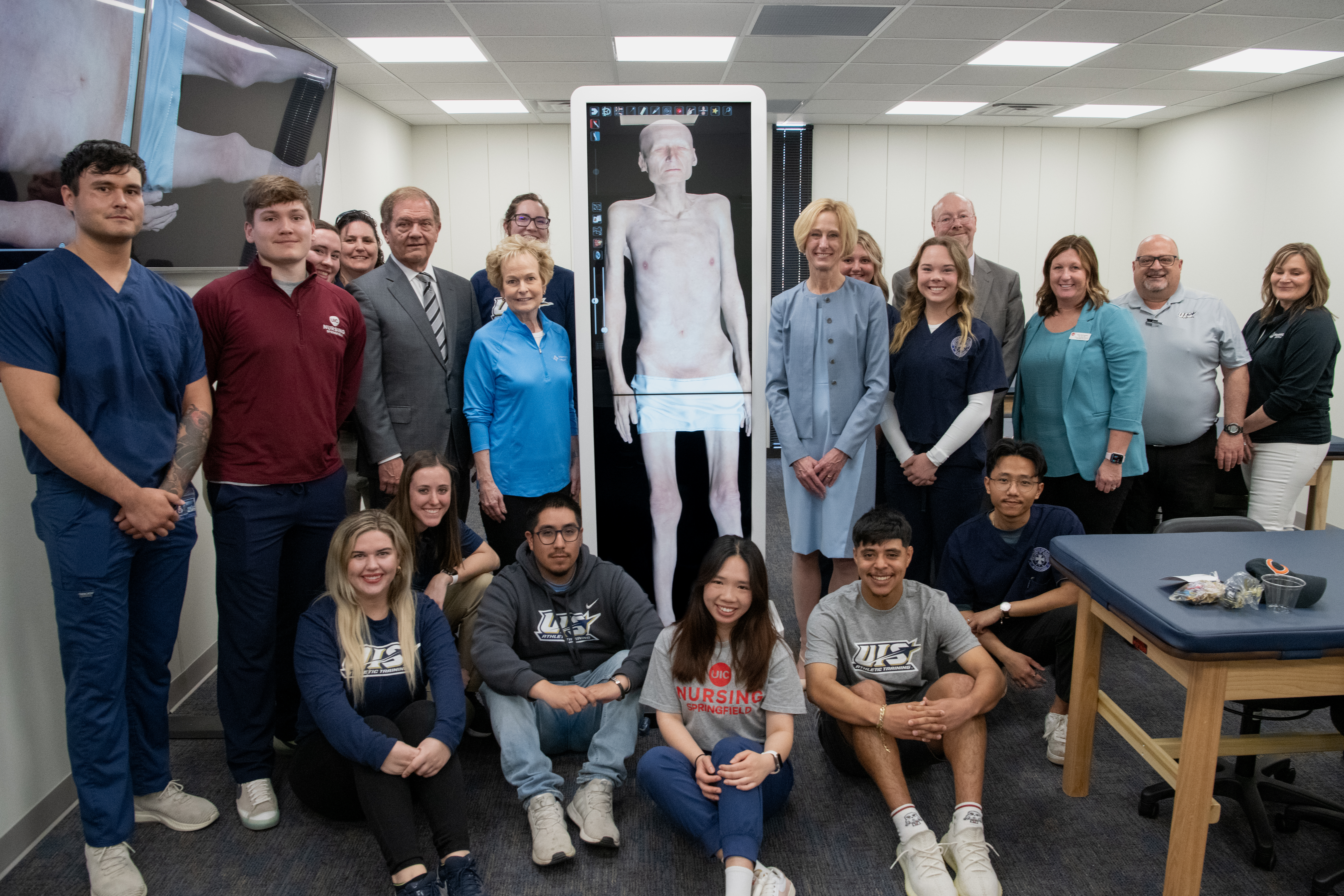
The Athletic Training program at the University of Illinois Springfield features dedicated classroom and lab facilities that give students hands-on experience in a professional learning environment. Equipped with advanced technology and simulation tools, these spaces help students apply classroom knowledge to real-world clinical practice, preparing them for success as future athletic trainers.
Students who successfully complete all the requirements of the Master of Athletic Training will receive a Master of Athletic Training or MAT degree from the University of Illinois.
Yes, completion of a bachelor’s degree in any field is required, along with completion of the prerequisite coursework and admission requirements.
All courses in the MATR must be taken at UIS.
No. All course work, with the exception of prearranged clinical education experiences, is offered on campus.
Yes. In January 2026 all individuals will need to graduate from a master’s program in order to be eligible for the Board of Certification exam for athletic trainers.
There is not required undergraduate major that must be completed to get into the MATR but students are strongly encouraged to complete a health-related major as a means to completing the prerequisite courses required for admission into the MATR. A health-related major (exercise science, kinesiology, health, etc.) will be the most efficient path for completing the prerequisite courses.
In general, your letters of recommendation should be completed by individuals who know your academic potential, work ethic, and/or character.
Yes, a car is recommended. Some clinical sites may be accessible via public transportation but many are not. Assignment to a clinical education site will not be based on the student’s access to a car.
No, this is a professional degree program intended to prepare students to take the Board of Certification Exam.
An interview is not required. We encourage you to schedule a visit to our campus to learn more about the program. Please contact Dr. Celest Weuve at cweuv2@uis.edu for more information.
Yes, but all application materials must be re-submitted.
Potentially, depending on the sport. Time demands for the MATR are extensive and often interfere with intercollegiate participation. However, there are a small number of sports that may allow for the flexibility to adjust around the demands of the MATR. Consideration of these requests will be conducted on a case-by-case basis. Please reach out the MATR Director for further information regarding intercollegiate participation.
A post-professional master’s degree program is designed for credentialed athletic trainers who want additional training beyond their professional degree. Professional programs, also referred to as entry-level programs, are designed for individuals seeking to become athletic trainers.
The number of students accepted into the program is based on the availability of lab space and clinical education sites. At this point, the maximum number we will accept is 20.
Classes begin with the start of the summer semester. Please refer to the Academic Calendar for the specific date.
An explanation of the programmatic fees and associated cost, as well, links to further information regarding graduate tuition, fees, and assessments can be found on the Program Expenses page.
This program is not designed to be a pre-physical therapy degree.
No, but all prerequisite courses must be completed prior to the start of the program. Applicants will be considered for admission while completing prerequisite courses or have courses planned for completion prior to the start of the program. Failure to satisfactorily complete prerequisite courses will result in acceptance to the MATR being rescinded.
The Master of Athletic Training Program will use preceptors and clinical sites that incorporate the following CAATE-required clinical education opportunities:
- Individual and team sports
- Sports requiring protective equipment (e.g. helmet and shoulder pads)
- Patients of different sexes
- Non-sport patient populations (e.g. outpatient clinic, emergency room, primary care office, industrial, performing arts, military)
- A variety of conditions other than orthopedics (e.g. primary care, internal medicine, dermatology)
Yes, many students work part-time during the academic year. When considering outside employment, it is important to also consider the high academic load (8-12 credits per semester) as well as the unique scheduling of the clinical education experiences. The MATR program is a full-time professional program that requires attendance in all classes and at all clinical education experiences which makes outside employment very difficult. It is not advisable to have a full-time job while completing the program. Please refer to the MATR Student Handbook for more information on outside employment.
The MATR is an intense 2-year, 64-credit hour, that is offered over 6 consecutive semesters (summer, fall, spring each year).
You may have prerequisite courses still in progress by the application deadline, but all prerequisites must be completed by the start of the program.
The primary focus of the MATR program is to deliver a high-quality, clinical-based educational experience for each student that prioritizes instruction of the CAATE Curricular Content Standards and provides variety clinical education experiences. The MATR requires coursework and various research assignments but does not include a traditional thesis.
Yes! The MATR received initial accreditation in 2021 and will be considered for reaccreditation in 2025.
Yes, community college and online courses from accredited institutions are acceptable. Only courses that do not include a lab component may be taken online.
The MATR faculty have decades of educational and clinical experience they bring into your courses. This allows the faculty to help bridge the gap between theoretical knowledge and real-world practice.
The MATR program is housed in the School of Health Sciences within the College of Health, Science and Technology.
No. The GRE is not required for admission into UIS or the MATR Program.
Questions regarding whether a course fulfills one of the above requirements should be directed to Dr. Celest Weuve at cweuv2@uis.edu. Please include a course description and syllabus with your inquiry. Additional information may be requested.
Primarily, your preceptors will be athletic trainers employed at a variety of settings. During your clinical education we expect you to be exposed to, and work with, numerous health care professionals such as, physical therapists, physicians, physician assistants, nurses, registered dieticians, psychologists and strength and conditioning specialists.